Home Maintenance Tips
Does your home need a water softener?
July 9, 20264 min read
 Anna Wenner
Clean and well-maintained gutters are one of the best ways to prevent water damage from storms. When gutters work the way that they are meant to, they help keep large amounts of water from dumping off of the roof and straight onto your foundation.
Storms can damage gutters or clog them with leaves, seed pods, and more. Because of this, you should try to do a quick visual inspection of your gutters after any major storm, even if it's just looking up at them from the ground for any sign of broken areas or noticeably piling up debris.
If you want less hassle around your gutters, gutter guards can be a great investment. They function essentially as a sort of grate laying flat over your gutter, making it easy for water to get in but not much else. That said, these can also get covered with a layer of leaves, pods, and other tree debris, so you’ll still want to follow the below steps periodically to make sure nothing is interfering with the guards.
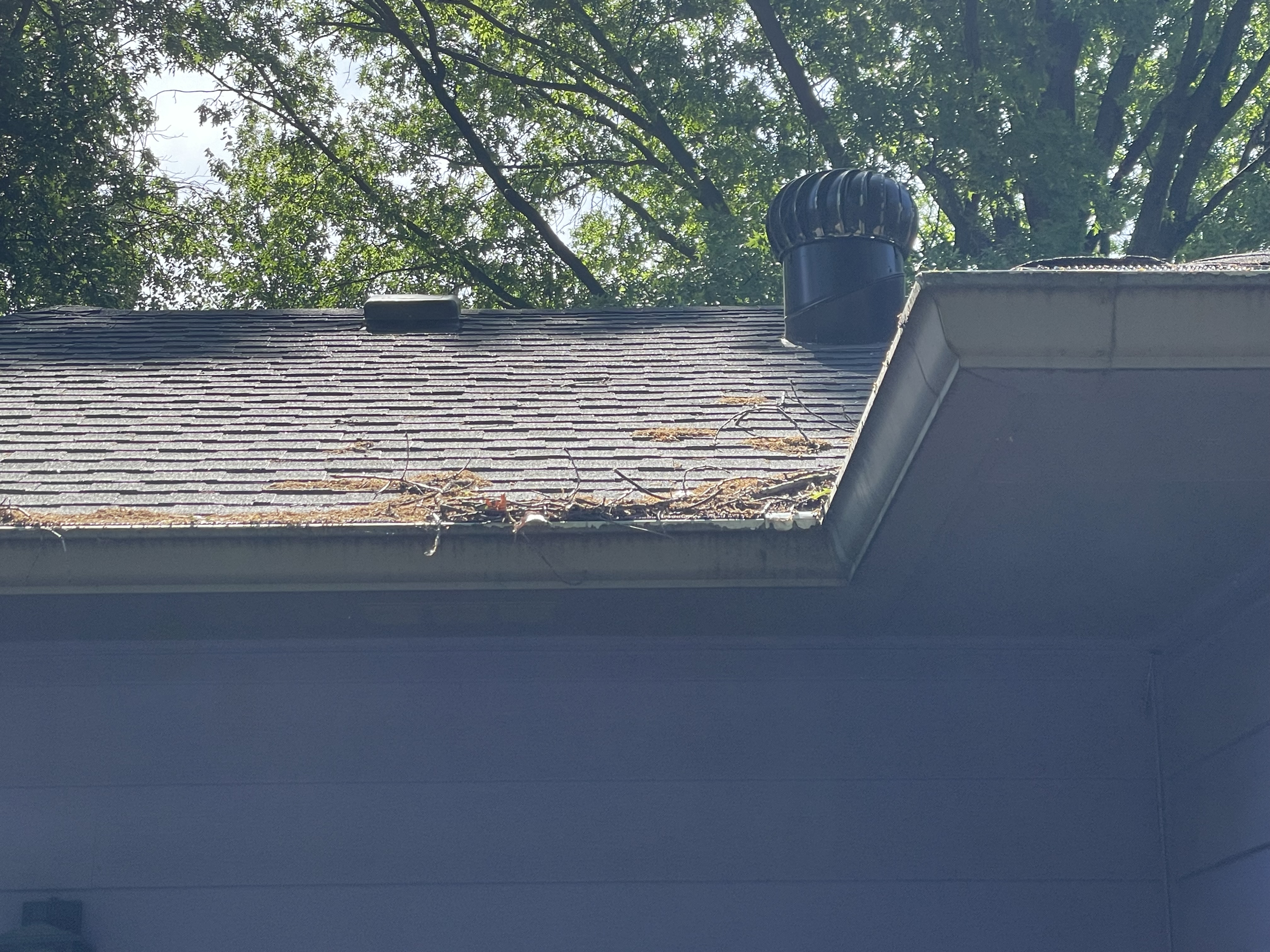
If it’s been a minute since you last cleaned out your gutters (or you can’t remember when the last time was), you may not need a ladder for this step. If you can see anything above the edge of your gutters—whether sitting on gutter guards or piled in the gutter itself—then you’ll need to clean your gutters.
And if you can see a plant growing in there? Well, let’s just say it’s a little over time. (But hey, it’s happened to us, too.)
Similarly, if you watch your gutters during a heavy rain, you can usually tell where a clog is by how the water runs. If it’s spilling over the side of the gutter anywhere, that’s a sign that there’s probably something blocking the water flow.
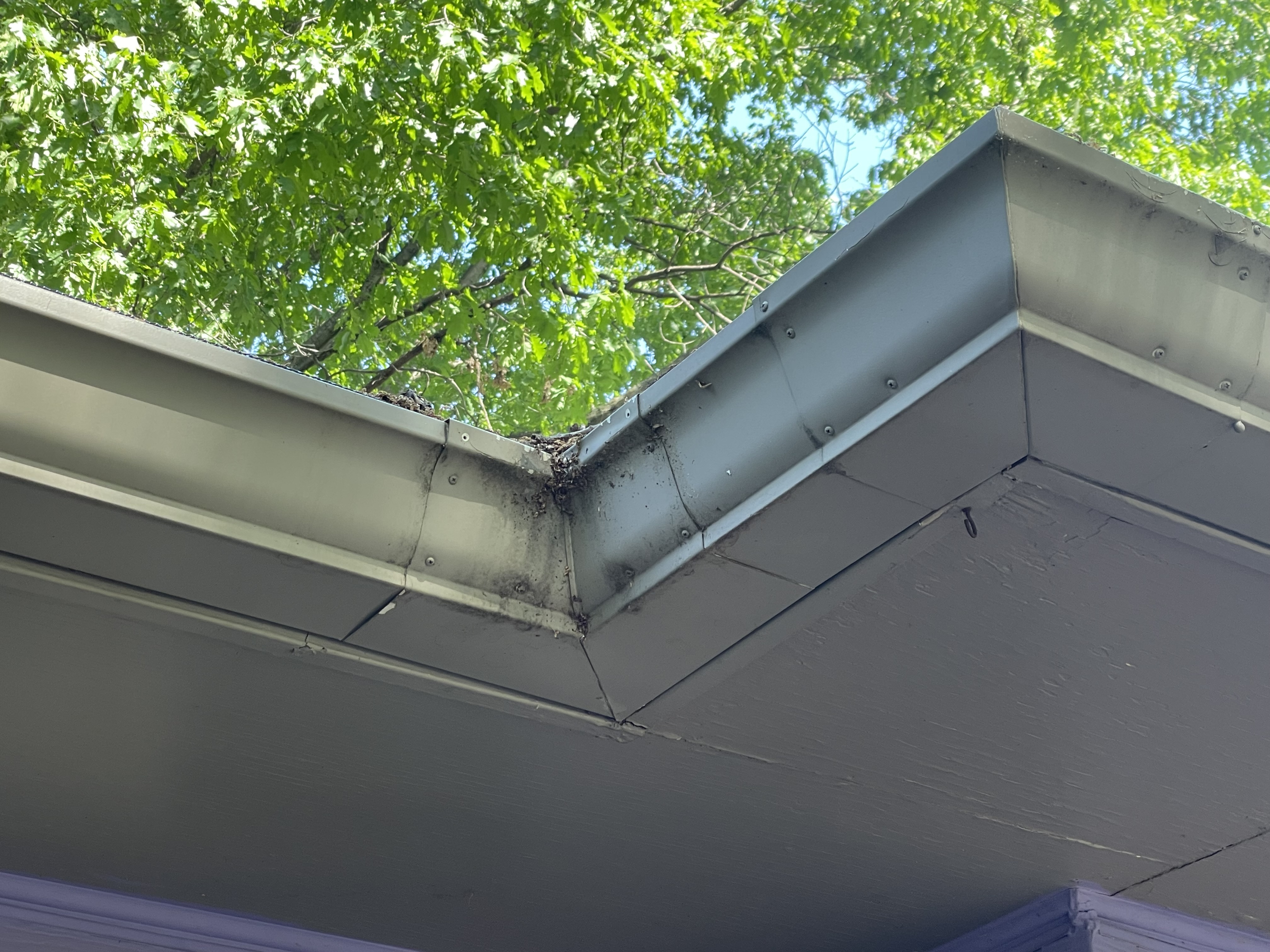
If you see water pouring out of the gutter anywhere it shouldn’t—but not spilling over the sides—then you may have a hole in the gutter in that area. You should never deal with either of these problems while it’s still raining, but take pictures and notes of where the problem is so you remember when the weather is nicer.
Depending on the height and steepness of your roof, sometimes it's easiest to stand on a ladder to perform an assessment of your gutters’ condition while other times it may be easier to sit or stand on the roof itself.
Whichever you do, always have a second person there to hold the ladder and keep an eye out for safety concerns from the ground. Never attempt this when it’s raining, snowing, or any other form of precipitation is likely or when you’re starting out especially tired, as it can increase your risks of falling.
While at gutter height, you can look at the interior of your gutters. Ideally, you'll find a clean pipe from one end of the roof to the other. More likely, you'll find leaves, seed pods, and other debris from trees. If you have gutter guards, you'll still want to check to make sure that the guards themselves aren't clogged with debris. You can often see clogs of this nature from the ground, however.
If you want to avoid a ladder but also don’t see signs that your gutters for sure need a good clean, you can base your assessment off time. Gutters should be cleaned every six months at minimum (more for places with a lot of trees or other outdoor debris like seed pods).
If you plan to hire someone to do this for you, make sure to have them check that there is no wear, holes, or other issues with the gutter beyond any buildup.
If your gutters have some clogs, it's time to get them clean. You can do this yourself for free, or can hire a professional if you're not the most comfortable with heights. You should not attempt to stand or sit on any particularly steep roofs, though you can still often clean these gutters from a ladder safely.
You can tell your roof is steep or unusually high by comparing it to surrounding homes and seeing if the slope looks more severe or the gutters are more than a story up. You will also notice the slope immediately if you ever do try to get on the roof, as it will likely feel more precarious to walk on or will give you the feeling that you might slide off (which shouldn't be how a safely navigated roof feels). On the flip side, a gently sloping roof will be easy to move around on for anyone not scared of heights and won't feel significantly different than a slight incline in the yard or a gentle ramp.
If you have particularly high roof lines, we recommend hiring a professional. You’ll need a much taller ladder for many of these homes, and this can increase the danger of any mistakes.
Regardless of your gutter heights, if you’re using a ladder to inspect or clean, be extremely cautious with your movements. Never try to lean off a ladder to reach a further spot. Always move the ladder so that it’s directly in front of the place you need to get to. This may sound like common sense, but when you’ve been at it an hour and you’re nearly done, you’d be amazed how tempting it is to say “Screw it” and just try to get that last little bit.
Take it from us—the ER trip and embarrassing story won’t be worth the five minutes you might save.
Once your gutters are clean, it'll be easier to see if they're in need of repair or replacement.
Look for signs of cracks, splits, paint damage, rust, pooling water, mold, water damage, water marks, or sagging. Any of these could be a sign that the corresponding section (or even the whole gutter system) needs to be replaced.
If you hired someone to clean your gutters, be sure that they check all of the above as well.
Using your garden hose, go to the highest point in the gutter and spray a strong stream into the gutter. Have a second person on the ground to watch the nearest downspouts.
If your gutters are working as intended, the water should cleanly go from its starting point and out the bottom of the downspout without splashing out or leaking anywhere along the way. If that's not what happens, troubleshoot where the water is getting caught, remove any blocks, and retest until it functions as intended.