
Home Maintenance Tips
Does your home need a water softener?
July 9, 20264 min read
Your HVAC air filter helps keep dirt, dust, pet hair, dander, and other unpleasant particles from circulating around your home. It can help with poor air quality days from pollution or fires and helps the unit run efficiently.
Forgetting to change the filter doesn’t just lead to worse air in your home—it can cause health complications, high energy bills, poor temperature regulation, and can even lead to your system breaking down. Even if you do no other HVAC maintenance, switching out the filter is an easy and quick way to avoid costly issues down the line.
You’ll hear from many that an HVAC filter should be changed anywhere from every 6 weeks to 6 months. However, every home has different needs.
To figure out how often your filter should be replaced, consider your lifestyle and the thickness of your filter. Thicker filters can be replaced less often, for instance, but additions like pets can increase how often your filter needs to be changed.
When you buy your filter, its packaging should say how often you need to replace it. It’s best to follow these guidelines as much as possible. That said, if you already tossed the packaging material ages ago, there are other ways to figure out the frequency of replacement that you need.
Though this is by no means an exhaustive or definitive list of replacement suggestions, if you’re after an at-a-glance gut check on when your filter needs replaced, try following this:
1 Month: If you have a lot of pets (or humans, for that matter) in the home or anyone with seasonal or other airborne allergies, you probably want to err on the cautious side by changing the filter more frequently. If you buy very thin or especially cheap filters, it’s also a good idea to change them more often.
3 Months / Per Season: One easy way to remember to change the filter is to do it as part of your seasonal chores. Putting up the garden hose for the winter? Throw in a new HVAC filter while you’re at it. This also helps get rid of any allergens from the previous season that might be trapped in the filter and stop them from continuing to circulate through your home.
6 to 12 Months: If you keep your home regularly cleaned, don’t have pets, use devices like room air filtration systems, and install a thicker filter, you may not need to replace as often. Even so, twelve months is the maximum most experts recommend.
By starting with the suggestions above, you should have a pretty good idea of where to start. However, if you want to check if you’re at the right frequency, it’s easy to do so.
Next time that you go to change the filter, hold the used filter up to the light. If it’s still mostly translucent (light passes through), then you have some more use out of it. On the other hand, if little to no light passes through, it’s time for a new one. (And if there are a litter of dust bunnies falling off of it, it’s definitely past time.)
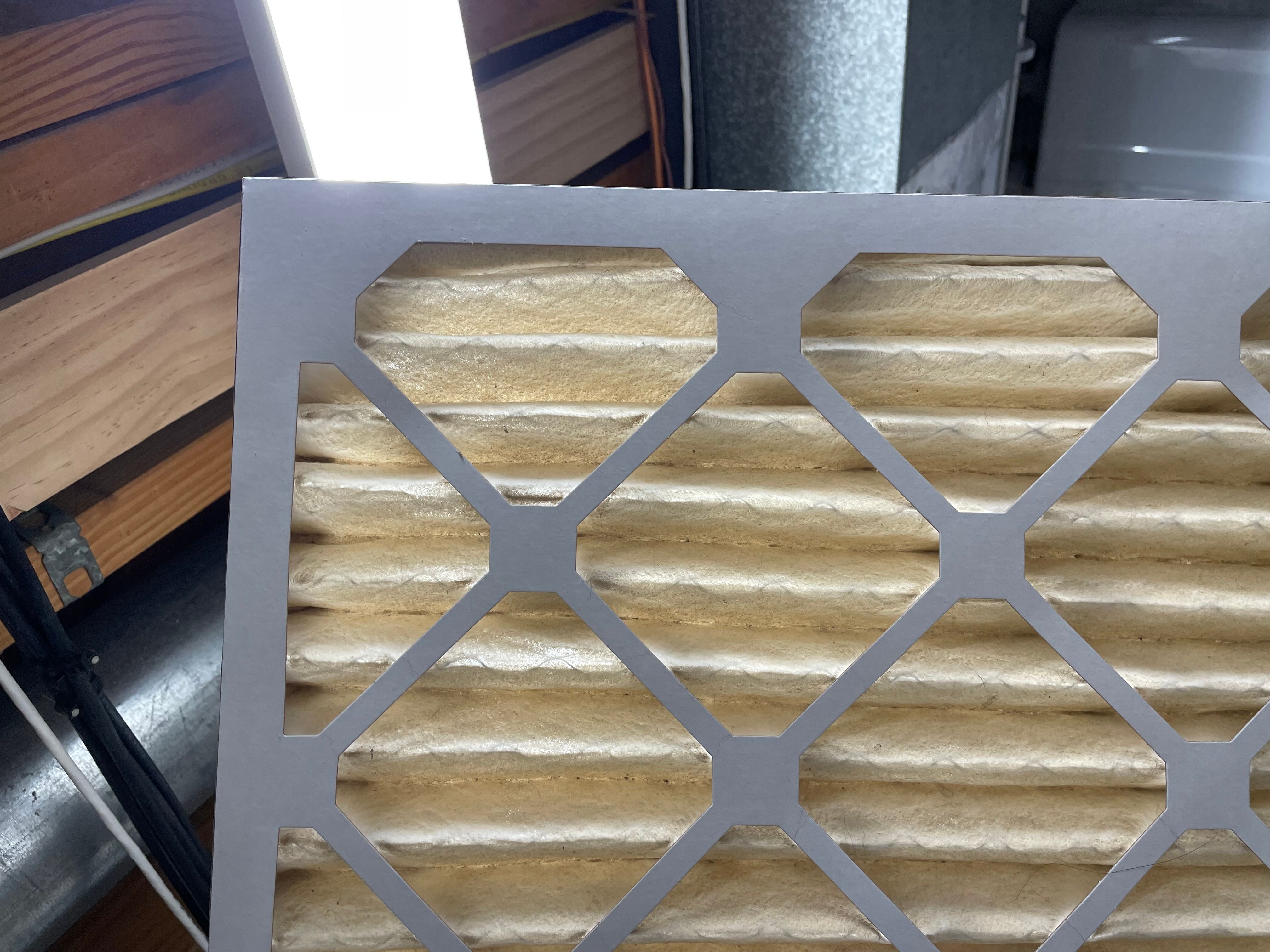
In these cases, you might try shortening your schedule a bit at a time until you find the right balance of a filter that is ready to be changed but not staying dirty too long.
The filter currently in your HVAC should have some information listed along its edge, such as its size. The filter should fit snugly within its slot, so if there is extra space, measure the space rather than replacing the existing filter with one of the same size.
Be sure to measure all three dimensions (length, width, and depth) and buy a replacement as close in size as possible.
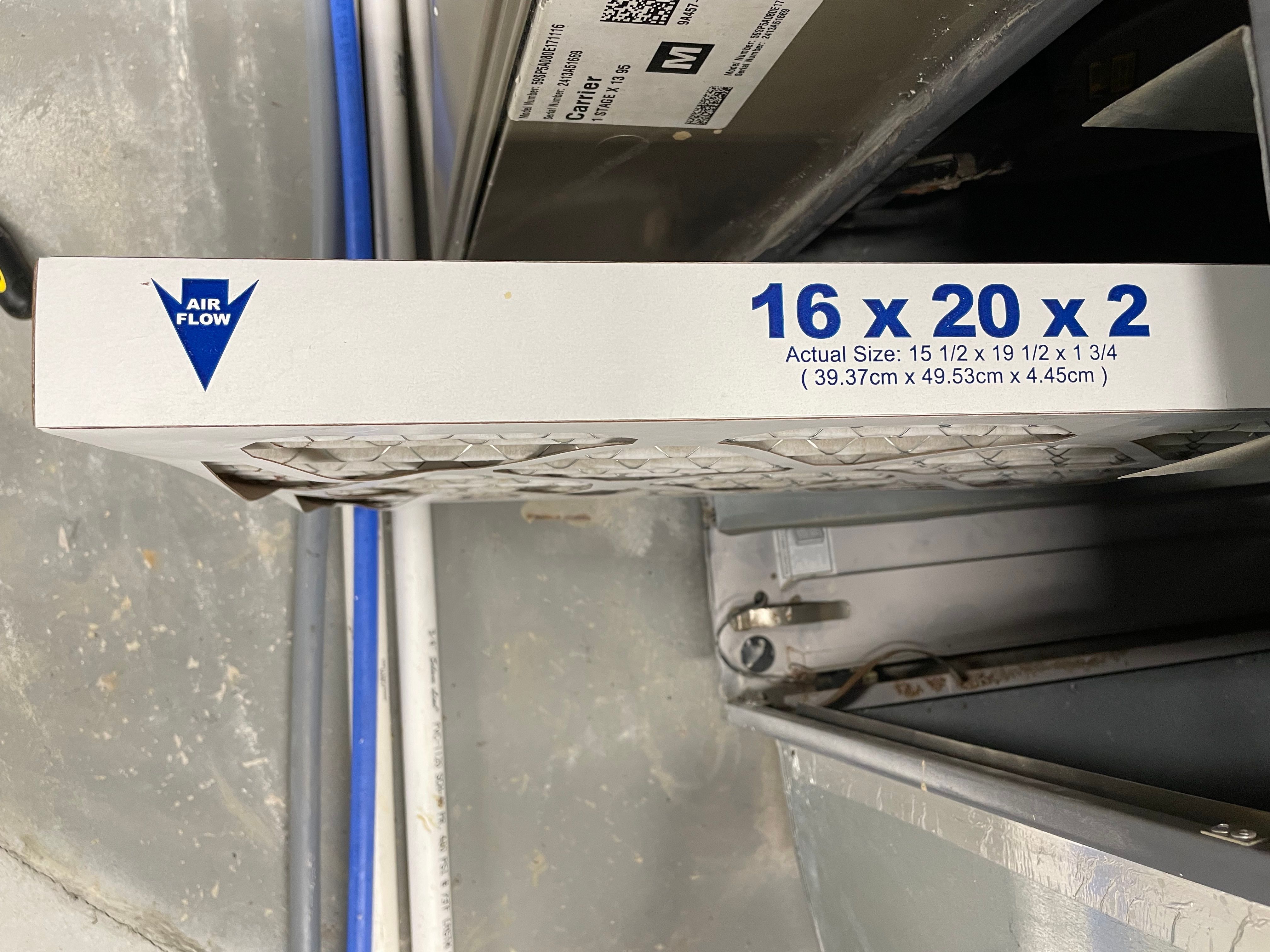
There are a lot of filter brands out there to choose from. While a brand name isn’t required for a quality product, Filtrete is one that regularly tops “best of” lists. Other brands that are talked about highly include Filter King, Aprilaire, Lennox, Carrier, and Woosh.
The MERV rating is basically your way of knowing how well an HVAC filter removes particles from the air. (It’s similar, though not the same, as a HEPA rating, if that helps.) It’s essentially measuring how good the net is for catching the bad stuff before it gets back into your air circulation.
A higher number means a smaller opening for air and particles to go through, which can be good for filtering but can also put unnecessary pressure on your system’s airflow. Because of this, while a higher number may mean better filtering, it doesn’t necessarily mean it’s the best option overall.
Wirecutter recommends choosing a filter with a MERV 13 rating when possible. This should be low enough to not put extra pressure on older systems while also filtering the air thoroughly even under a lot of heavy use (such as in wildfire-prone areas).
If you have a really ancient system, or it’s on its last leg, you might want to opt for a MERV 8 just to be on the safe side. The lower the number, the less resistance as it pulls in air and the less hard your HVAC system has to work.
(As a note, you may also see MERP or FPR ratings, which are basically a similar system developed by specific stores. The same rule applies here though—a higher number means better filtration, but also more potential strain on your HVAC unit.)
You can purchase air filters at most hardware stores and online venues such as Lowes, Home Depot, or Amazon. Buying in bulk will be cheaper, especially if you plan to have them shipped.
Both Wirecutter and Consumer Reports rated the Filtrete MERV 13 MPR 1900 air filter as the best you can buy, so if you’re looking for a (mostly) sure thing, that’s where we’d start.
You should always buy the size of air filter that fits into the slot in your AC unit, including the depth. While 1” and 2” filters are the most common, that doesn’t necessarily mean that’s what you have.
For example, when I moved into my house, it had a 2” deep filter in place but a 4” opening. I fixed that by replacing it with a 4” filter when it was time for a new one. (We also realized that the old filter had been installed the wrong direction and fixed this with the new filter.)
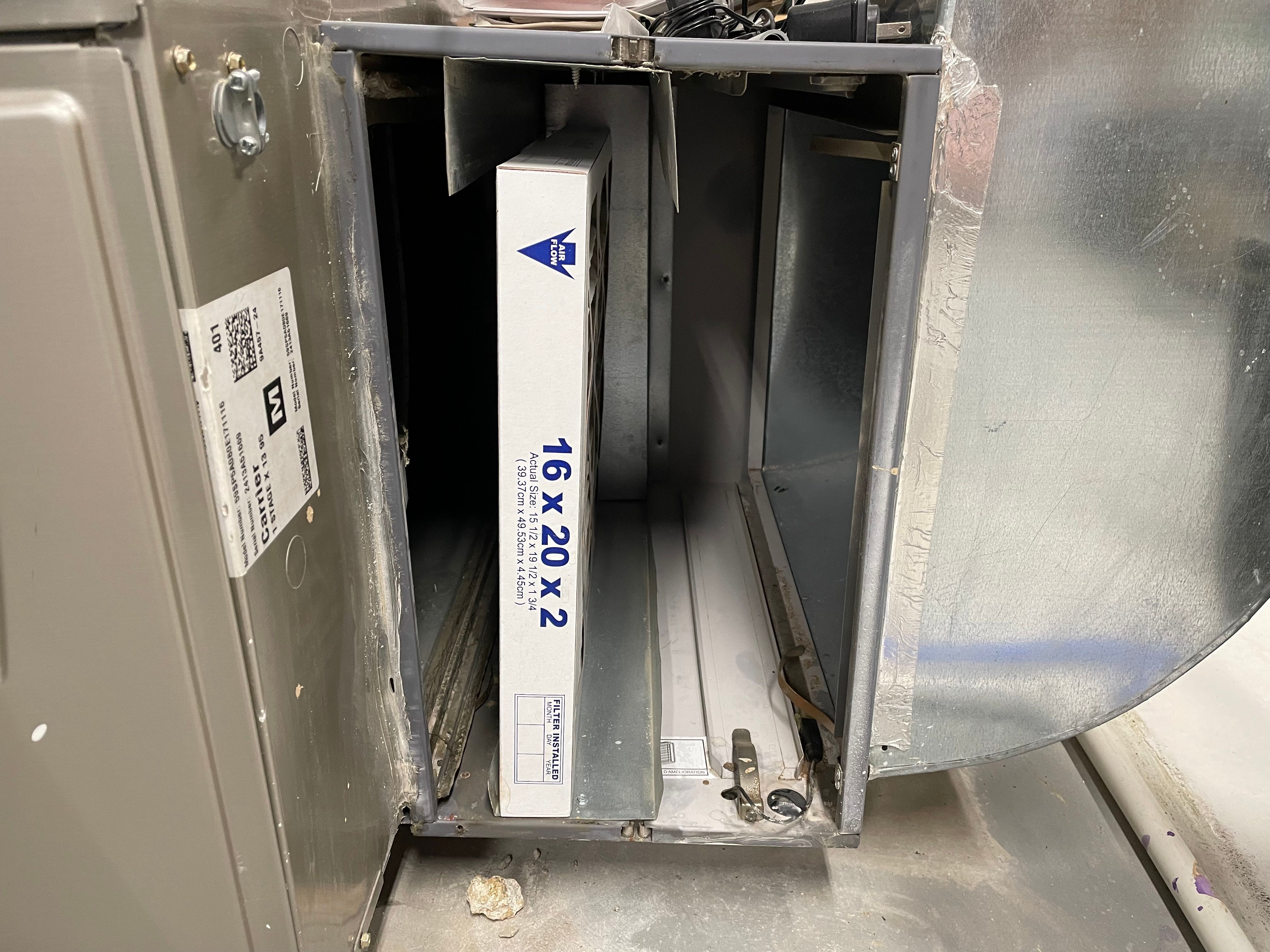
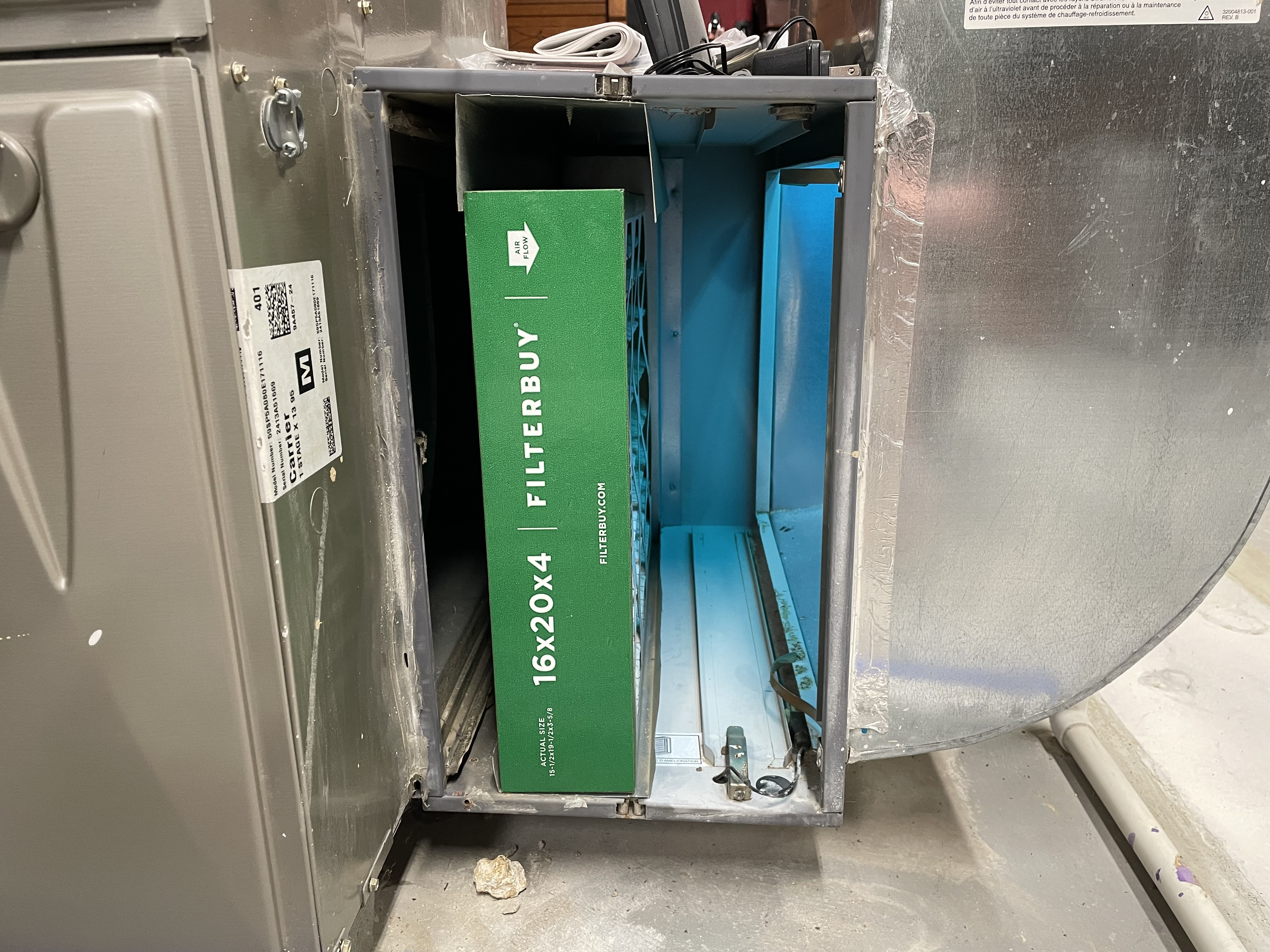
Slide out the old filter. Some units might have a panel to remove first, while others provide immediate access. Used filters can be disposed of with regular home garbage.
Typically, you will be disposing of the filter itself as well as the paper or plastic frame holding it. However, some filters are reusable and should instead be washed, dried, and returned to the HVAC unit.
A good rule of thumb is that if the whole thing seems to be made of paper and cardboard, you can toss it all and replace it. If it’s made of sturdier plastic or metal, you may want to look up the brand to see if it’s meant to be cleaned rather than buying all new filters. It can save you a decent amount of money down the line.
When getting rid of an old filter, we recommend putting it into a garbage bag to avoid tracking dust, debris, and other particles through your home. You can also check your local trash collection guidelines to see if there are any specific steps you need to follow.
Remove any plastic or packaging from the filter. (It may seem obvious, but you’d be surprised how often people miss this step.)
Then, install it as the arrow on the filter (located on the thinnest sides of the filter) indicates. The arrow should be pointing the direction that the air is flowing. You can determine which direction this is by looking at the old filter before removing it or putting your hand into the space the filter usually sits and feeling which direction the breeze is coming from.